Personal Color Analysis: Autumn Season Deep Dive
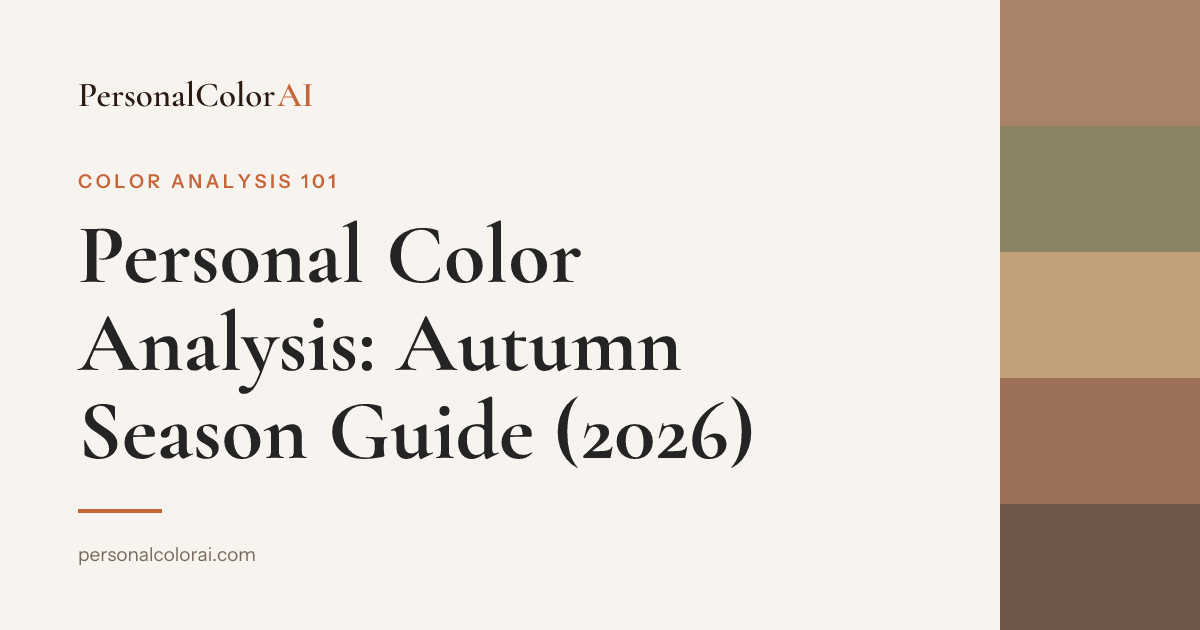
Autumn is a warm, muted color season defined by earthy depth — terracotta, olive, camel, and chocolate brown rather than anything bright or icy. Autumn coloring pairs warm golden, olive, or bronze-toned skin with brown, auburn, or dark golden hair and hazel, brown, amber, or warm green eyes. It splits into three sub-seasons — True, Soft, and Deep Autumn — and it's the most misidentified season of the four.
What Makes Someone an Autumn?
Autumn sits in the warm corner of the color wheel alongside Spring, but where Spring is warm and bright, Autumn is warm and muted. That muting — a softening or earthy quality to the coloring — is what separates Autumns from Springs even when both have warm skin.
The three signatures of Autumn coloring:
Warm undertone: Autumn skin has a distinctly warm quality — golden, peachy, olive, bronze, or tawny. The skin may be light or quite dark, but the underlying tone is unmistakably warm. Veins tend to appear green or olive rather than blue.
Muted or earthy coloring: Autumn features are never crystal clear or sharply bright. Hair is usually brown (from golden brown to dark chocolate), auburn, copper, or dark auburn-red. Eyes run toward hazel, warm brown, amber, moss green, or muddy blue-green — they often have flecks of gold or bronze. Even the whites of the eyes in Autumns tend toward a warm creamy tone rather than crisp white.
Low to medium contrast: Most Autumns have fairly harmonious coloring — their features blend together rather than creating sharp contrast. There are exceptions (Deep Autumn, which has higher contrast), but the archetypal Autumn looks like they emerged from a forest at golden hour.
The Three Autumn Sub-Seasons
True Autumn
True Autumn is the most balanced Autumn — warm, muted, and medium intensity. It's what most people picture when they think "Autumn season" — see the full True Autumn palette.
Features: Medium warm skin with golden or peachy undertones, medium-depth brown or auburn hair, warm brown or hazel eyes. Overall coloring is moderately muted — not too light, not too dark, not too bright.
Best colors: The True Autumn palette is the earthiest of the three sub-seasons: - Warm browns: camel, tan, saddle brown, chocolate - Muted greens: olive, moss, sage, hunter green - Earthy oranges and reds: terracotta, rust, burnt sienna, brick red - Warm golds and mustards: old gold, goldenrod, warm bronze - Neutrals: warm off-white (not bright white), warm beige, camel, dark chocolate
Avoid: Icy pastels, bright neons, cool grays, true black, fuchsia, vivid purples
Soft Autumn
Soft Autumn is the most muted of all 12 seasons — softer than True Autumn, and the softest season in the entire system. If you've struggled with color analysis because "Autumn" feels too intense for you, but "Summer" feels too cool, Soft Autumn is likely your answer.
Features: Light to medium warm skin that may look beige or lightly peachy — often not obviously warm at first glance. Hair is usually a lighter, more muted brown (dark ash blonde to light warm brown), and eyes are typically soft gray-green, hazel with gray tones, or muted blue-gray. The overall effect is soft and blended — nothing stands out sharply.
Best colors: Everything one step softer than True Autumn: - Dusty pinks: mauve, dusty rose, blush with a peach undertone - Soft warm browns: camel, warm taupe, pale gold, warm stone - Muted greens: soft sage, dusty eucalyptus, warm gray-green - Soft oranges: warm peach, dusty coral, very muted terracotta - Neutrals: warm light gray, soft camel, greige (beige-gray blend)
Soft Autumn is the season most easily overwhelmed by color. High-contrast or vivid outfits look costume-y on Soft Autumns; their palette does best with tonal dressing — similar values blended together.
Avoid: Everything that's high-contrast or vivid. Black is particularly unflattering — it's too harsh. Navy can work if muted; bright navy will overwhelm. Icy colors are completely wrong.
Deep Autumn
Deep Autumn is the darkest and richest sub-season in the Autumn family. It overlaps with Deep Winter in the boundary zone between warm and cool deep seasons.
Features: Medium to deep warm skin — often olive, bronze, or medium to dark brown. Hair is usually dark: dark brown, dark auburn, or naturally black with warm undertones. Eyes are typically dark brown, dark hazel, or very dark green. Overall coloring is high-contrast — dark features against warm medium-to-deep skin.
Best colors: Deep, rich, and warm: - Rich greens: forest green, dark olive, deep hunter green, teal (warm side) - Rich earthy colors: dark terracotta, burnt orange, deep rust - Deep neutrals: chocolate brown, dark camel, warm dark navy - Rich warm reds: brick red, garnet, deep burgundy with warm undertones - Metals: bronze, warm gold, copper
Deep Autumn people can wear darker, richer colors than True or Soft Autumn without being overwhelmed — they have the depth to carry them, as the Deep Autumn palette shows.
Avoid: Icy colors, pastel shades, bright or neon colors. Unlike True and Soft Autumn, Deep Autumn can wear black if the outfit includes warm colors near the face — but it's still not the best neutral. Deep chocolate brown or dark navy are better choices.
Why Autumn Is Often Misidentified
Autumn is one of the most misidentified seasons in the system, and a few patterns explain why.
Soft Autumns are often mistyped as Summers: Both seasons are muted, and Soft Autumns can have coloring that reads as neutral or even slightly cool on the surface. The key test: how does soft peach look versus soft rose? Soft peach (warm) brightens Soft Autumns; soft rose (cool) drains them.
True Autumns are often mistyped as Springs: Both are warm. The difference is intensity. Spring colors are clear and bright; Autumn colors are muted and earthy. A True Autumn in a clear coral (Spring color) will look like the color is wearing them. A True Autumn in a muted terracotta looks polished and intentional.
Deep Autumns are often mistyped as Winters: Both have high contrast and can wear deep colors. The key difference is warmth: Deep Winters look best in cool, stark colors (black, icy blue, stark white). Deep Autumns look best when the deep colors have a warm or earthy undertone. A simple test: does charcoal gray or warm chocolate brown look better near your face?
Celebrity Autumns
Looking at celebrities with confirmed or widely accepted Autumn coloring helps calibrate the season:
- True Autumn: Julianne Moore, Jessica Alba, Keira Knightley - Soft Autumn: Drew Barrymore, Jennifer Aniston, Sarah Jessica Parker - Deep Autumn: Idris Elba, Beyoncé (some analysts), Eva Mendes
How to Wear Autumn Colors
The Autumn palette works best when you lean into the earthiness rather than fighting it. A few practical principles:
Warm your whites and blacks: True white and true black are cold tones that clash with Autumn coloring. Substitute warm off-white (ivory, cream, bone) for white, and chocolate brown or dark olive for black.
Layer earthy tones: Autumn's palette has exceptional depth when layered — camel with olive, terracotta with rust, brown with dark green. The color harmony comes naturally because these shades already harmonize in nature.
Use metals as accent: Bronze and copper jewelry are neutrals for Autumn — they don't fight with the warm palette the way silver does. Gold works, but bronze has a deeper resonance.
Want to confirm if you're an Autumn — and which sub-season? Upload a selfie to PersonalColorAI for a free AI-powered analysis. The model assesses your specific undertone and coloring depth to identify your season and sub-season. For more on the full color season system, see our 12-season color guide.
Frequently Asked Questions
What are the characteristics of an Autumn color season?
Autumn people have warm undertones with golden, olive, or bronze quality to the skin, usually paired with brown, auburn, or dark golden hair and hazel, brown, amber, or warm green eyes. The overall coloring is warm and muted — never icy or crystal clear. There are three Autumn sub-seasons: True Autumn, Soft Autumn (the most muted of all 12 seasons), and Deep Autumn (the darkest and richest).
What colors does an Autumn season look best in?
Autumn seasons look best in warm, earthy tones: terracotta, camel, rust, olive green, chocolate brown, burnt orange, warm gold, and dark hunter green. Avoid icy pastels, cool grays, bright neons, and true white — substitute ivory or cream for white and warm dark brown or navy for black.
What is the difference between True Autumn and Soft Autumn?
True Autumn has medium-intensity warm, muted coloring — the classic earthy palette. Soft Autumn is the most muted season in the entire 12-season system, with softer and less saturated coloring than True Autumn. Soft Autumns can be overwhelmed by the richer tones that work for True Autumns; their palette is lighter and dustier overall.
How do I know if I'm a Deep Autumn or Deep Winter?
The key test is warmth: Deep Autumns look best when deep colors have a warm or earthy undertone (chocolate brown, dark olive, warm dark navy, forest green). Deep Winters look best in cool, stark colors (black, icy blue, stark white, cool charcoal). Hold a warm brown versus a cool charcoal gray near your face — whichever looks better indicates which deep season you belong to.
Are Autumns warm or cool toned?
Autumns are warm-toned. The Autumn season sits in the warm-and-muted quadrant of the color wheel, meaning warm undertones combined with relatively low color saturation in the natural coloring. All three sub-seasons (True, Soft, and Deep Autumn) are warm — though Deep Autumn sits near the boundary with cool Deep Winter.