Best Blush for Soft Autumn: Soft Peach, Warm Nude, and Dusty Rose
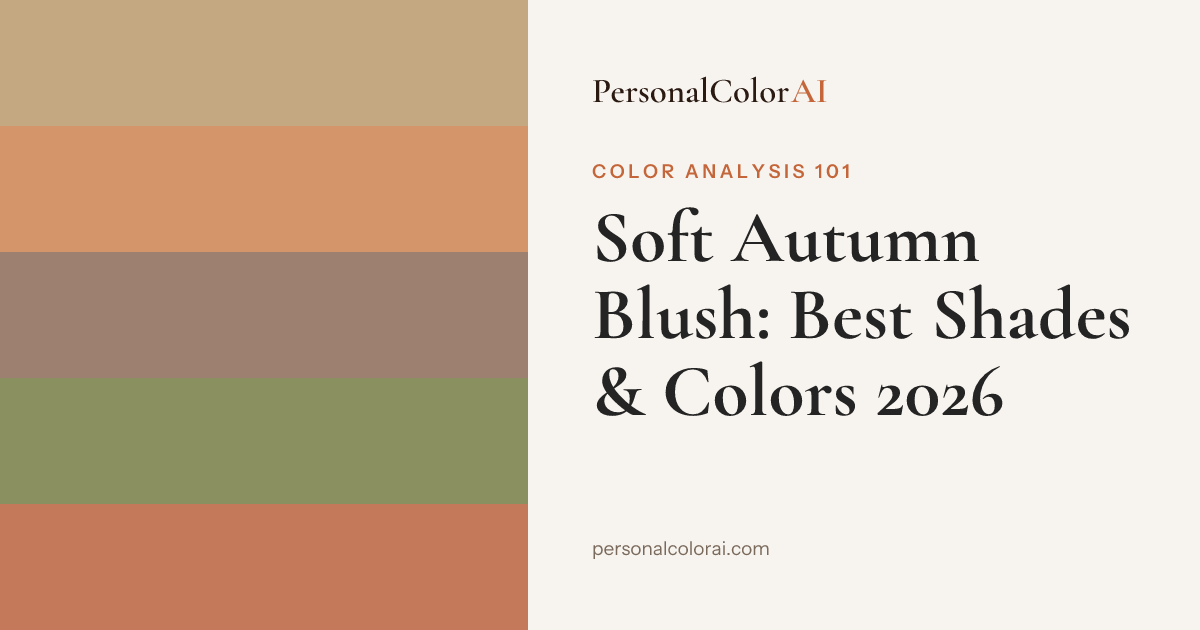
The best blush for Soft Autumn is soft peach or warm nude — warm-leaning, muted, and gentle, never bright or cool-toned. Dusty warm rose, muted apricot, and soft terracotta complete the range; all five appear in or next to the season's own palette. Choose matte or satin cream formulas that melt into skin. Avoid vivid coral, fuchsia, cool pink, and icy shimmer: brightness overwhelms this low-contrast coloring and blue-based pinks fight its warmth.
Soft Autumn sits in makeup's most underserved middle ground: too warm for the rose blushes, too muted for the corals, too light-handed for the terracottas that dominate the warm side of the aisle. The season data gives the target plainly — soft peach or warm nude, nothing bright, nothing cool — and once you see the pattern, an entire quiet category of blushes opens up. They're the ones marketing calls 'nude' and undersells.
Some product links below are affiliate links.
What blush suits a Soft Autumn?
Soft peach, warm nude, and their dustier relatives. The Soft Autumn palette maps the blush shelf directly: Dusty Peach, Dusty Rose, Soft Terracotta, Warm Sand. The season's structure explains why. A neutral-warm undertone means blush leans peach and beige rather than pink and blue. Medium depth means real pigment is fine — this isn't Light Spring's whisper. And low contrast with fully muted chroma means the color must be grayed and softened, because anything vivid instantly becomes the loudest thing on the face.
Warm but hushed. If a blush would look at home next to a cup of milky chai, it's probably yours.
The best blush shades for Soft Autumn
Soft peach is the season's named default — peach with the neon removed. Glossier Cloud Paint in Dusk sits at the deeper, browner end of this idea: a nude-peach that reads like natural warmth rather than applied color.
Warm nude is the workhorse. Tarte Amazonian Clay Blush in Exposed built its reputation on exactly this brief — a muted warm rose-nude that flatters without announcing itself, which is the entire Soft Autumn aesthetic in one pan.
Dusty warm rose — note the qualifier — is the season's version of pink. Dusty Rose is in the Soft Autumn palette, but it must be the warm, brown-leaning kind. A dusty rose blush with warm undertones works; a lilac-leaning one belongs to Soft Summer.
Muted apricot adds gentle golden life for days the nudes feel flat. Look for a muted apricot cream blush described as soft or sheer rather than juicy or vivid.
Soft terracotta is the deep end — the most color this season should carry, straight from its palette. Applied thin, a soft terracotta blush doubles as a subtle bronzer-blush hybrid and warms the whole face.
Cream, jelly, or powder?
Cream first. Soft Autumn's low contrast punishes visible edges, and cream formulas blend to nothing at the borders in a way powder needs real skill to match. Matte and satin finishes only — the season's gentle, matte-adjacent skin quality is fought by shimmer, the same way it's fought by brightness. K-beauty's muted-toned cheek products are a natural hunting ground: Korean cream blushes in muted coral and beige-rose tend toward exactly this soft-focus register. If you're oily, a satin powder in warm nude works; just blend the perimeter twice.
Find your color season — free analysis
Blush shades Soft Autumn should avoid
Hot pink and fuchsia are on the season's worst-colors list, and on the cheek they're the most jarring version of the mistake — cool, vivid, and impossible to blend into muted warm skin.
Bright coral gets the temperature roughly right and the volume badly wrong. Soft Autumn warmth is steamed milk, not citrus. If the coral could work on a Bright Spring, it's two notches too loud here.
Cool blue-based pink — even soft ones — reads chalky and slightly gray against a neutral-warm undertone. The pink itself isn't the problem; the blue underneath it is.
Icy shimmer and frost violate the season's finish rules. Icy Lavender sits on the worst-colors list for the same reason: cold sparkle against soft warmth looks like frost on toast.
Where to place it
Mid-cheek, blended wide and soft — the goal is a diffused warmth that could plausibly be your own circulation. Soft Autumn takes well to the 'second skin' approach: apply cream blush after foundation but before powder, so the pigment sits under a veil and loses any hard finish. Keep placement horizontal rather than sharply lifted; dramatic sculpting adds contrast this low-contrast season doesn't want. A final tip that earns its keep: use the same soft terracotta on cheeks and lightly on lids for the tonal, tea-stained harmony this coloring wears better than any other.
The shade names do half the shopping for you. Words that promise quiet warmth — bare, nude, whisper, sandalwood, toast — usually land inside Soft Autumn's range, while anything called pop, punch, flush, or berry usually doesn't. Pair the cheek with the muted coral and warm-nude lips this season wears and the soft camel and sage of its wardrobe palette, and the whole look settles into the tonal, gently expensive harmony Soft Autumn does better than any other coloring. If one element ever pops in the mirror, that element is the mistake.
The line between Soft Autumn and Soft Summer runs straight through the blush drawer — warm dust versus cool dust. If you're not certain which side you're on, take the free analysis; the $4.99 Reading settles it with your full palette, worst colors, and a season-matched makeup guide.
Frequently Asked Questions
What blush color suits Soft Autumn best?
Soft peach and warm nude are the best blush colors for Soft Autumn, with dusty warm rose, muted apricot, and soft terracotta as extensions. Everything should be warm-leaning and muted — nothing bright, nothing cool-toned.
Can Soft Autumn wear pink blush?
Only the warm, dusty kind. A brown-leaning dusty rose works because it appears in the season's own palette. Cool blue-based pinks — even soft ones — read chalky against Soft Autumn's neutral-warm undertone.
What is the difference between Soft Autumn and Soft Summer blush?
Temperature. Both seasons need muted, gentle shades, but Soft Autumn's dust is warm — peach, apricot, brown-rose — while Soft Summer's is cool — mauve, gray-rose. If a muted blush leans lilac, it's Soft Summer's; if it leans caramel, it's Soft Autumn's.
Cream or powder blush for Soft Autumn?
Cream, in matte or satin finish. It blends without visible edges, which matters for this low-contrast season, and it preserves the soft, natural skin quality. Avoid shimmer and frost finishes entirely.
Is terracotta blush good for Soft Autumn?
Soft terracotta, yes — it's in the season's palette and works applied thinly as the deep end of the range. Full-strength brick terracotta is better suited to Warm and Deep Autumn; on Soft Autumn keep it sheer.