Best Blush for Light Spring: Soft Peach, Light Coral, and Sheer Apricot
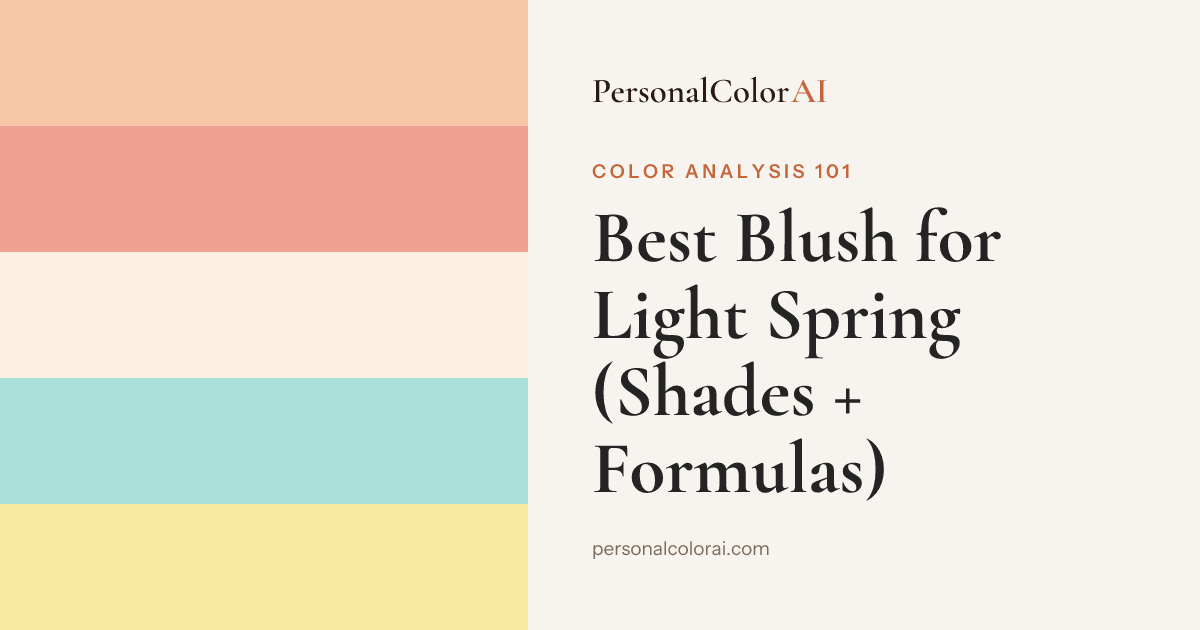
The best blush for Light Spring is soft peach, light coral, peach-pink, or sheer apricot — warm, light, and applied more delicately than any other season. Cream and jelly formulas in one sheer layer suit Light Spring's fair, luminous skin better than pigmented powders. Avoid fuchsia, dark berry, terracotta, and anything cool or heavily muted: dark shades overwhelm this coloring and blue-based pinks fight the warm undertone.
Light Spring is the season most likely to look like it's wearing someone else's blush. One swipe of a normal-strength pink and the whole face reads costume, because this coloring — very light depth, low contrast, warm-neutral undertone — needs less pigment than almost anyone else at the makeup counter. The right blush for Light Spring isn't a statement. It's the flush you'd have after a short walk in April.
Some product links below are affiliate links.
What blush suits a Light Spring?
Soft peach, light coral, peach-pink, and sheer apricot. Every one of those is warm, light, and gentle — the three qualities that define this season. Your undertone is warm-neutral, so blush needs a peach or golden-pink base rather than a blue-pink one. Your depth is very light, so pigment has to stay translucent or it dominates. And your contrast is low, so the blush should blend into the skin rather than sit on it as a defined shape.
The Light Spring palette literally contains a color named Blush — a warm, milky peach-pink — plus Light Peach, Soft Coral, and Peach Pink. Those four are your blush shelf. If a cheek color could pass for one of them, it will work; if it's darker, cooler, or dustier than all of them, it won't.
The best blush shades for Light Spring
Soft peach is the default. It matches the natural flush of warm fair skin so closely that people register 'rested,' not 'blushed.' A sheer cream like Glossier Cloud Paint in Beam is the classic version: buildable from nearly invisible, warm without going orange.
Light coral is your color day. It has a touch more energy than peach while staying inside the season's soft range. Look for corals described as milky or sheer — a sheer coral cream blush rather than a saturated coral powder, which belongs to True and Bright Spring.
Peach-pink covers the days you want pink without the chill. The pink must sit on a peach base — think ballet pink warmed up a degree. Peripera Pure Blushed Sunshine Cheek has soft peach-pink options with the low pigment load Korean formulas are known for, which is exactly right here.
Sheer apricot is the sun-kissed option — a whisper of golden warmth that doubles as a bronzer substitute, since real bronzer is usually too heavy for this season. A jelly or balm blush in apricot keeps it glassy and light.
Warm milk-pink, the shade the palette calls Blush, is the no-makeup-makeup pick for work and video calls. A nude-pink cream blush in one thin layer reads as skin, not product.
Cream, jelly, or powder?
Cream and jelly, almost always. Light Spring skin tends to read luminous, and powder blush can flatten that glow while grabbing more pigment than the season can carry. K-beauty jelly pots — fwee Blurry Pudding Pot is the cult example — deposit a thin, bouncy stain you can build one breath at a time. If your skin is oily and creams slide, choose a finely milled powder and use half of what you think you need, applied with a fluffy brush rather than a dense one.
Find your color season — free analysis
Blush shades Light Spring should avoid
Fuchsia and hot pink are on your season's worst-colors list for a reason: the blue base clashes with your warm undertone and the saturation swallows your soft contrast. The blush becomes the first thing anyone sees.
Dark berry and wine are a depth problem. Against very light skin they create a bruised, harsh patch instead of a flush — the contrast is simply too high for this coloring.
Terracotta and brick belong to the Autumn seasons. They're warm, but muted and heavy, and on Light Spring they read muddy rather than fresh.
Dusty mauve fails in two directions at once: too cool and too gray. If a shade looks slightly dirty in the pan, it will look slightly dirty on a Light Spring cheek.
Where to place it
High on the apples of the cheeks, blended softly back and up — never sculpted down toward the jaw, which adds a heaviness this delicate coloring doesn't want. Apply cream with fingertips and tap, don't swipe; warmth from your hands sheers the product out further. Build in two thin layers if you need more, and stop one layer before you think you're done. Light Spring blush should be visible from across the room only as good health.
One more habit worth building: coordinate the flush with the rest of the face instead of treating blush as a separate decision. Light Spring's best looks keep everything in the same soft warm register — peach cheek, peachy-nude lip, champagne lid — so no single element outruns the others. And when you're shopping in person, swatch on the back of your hand and walk to a window: store lighting exaggerates warmth, and a peach that looks perfect under fluorescents can read a full step too orange in daylight. If the swatch disappears into your skin with just a whisper of warmth left behind, that's the one.
Not sure Light Spring is actually your season? A shade this specific only pays off if the diagnosis is right. Run a free analysis to check, and the full Reading — $4.99, one time — gives you your complete palette, colors to avoid, and a makeup guide built around your exact coloring.
Frequently Asked Questions
What blush color suits Light Spring best?
Soft peach is the single best blush for Light Spring, with light coral, peach-pink, and sheer apricot close behind. All of them are warm, light, and delicate, which matches the season's warm-neutral undertone, very light depth, and low contrast.
Can Light Spring wear pink blush?
Yes, if the pink is peach-based and sheer. A warm milk-pink or peach-pink works beautifully. Cool blue-based pinks like fuchsia or ballet pinks with a lilac cast clash with Light Spring's warm undertone.
Is cream or powder blush better for Light Spring?
Cream and jelly formulas suit Light Spring best. They apply sheer, preserve the season's natural luminosity, and build gradually. Powder blush tends to deposit more pigment than this very light coloring can carry.
Should Light Spring wear terracotta blush?
No. Terracotta is warm but too muted and too deep for Light Spring — it reads muddy against fair, clear coloring. Keep the warmth but move it lighter and clearer: apricot instead of terracotta.
How much blush should Light Spring apply?
The least of any season. One sheer layer, tapped on with fingertips, is usually enough. Light Spring's low contrast means even moderate pigment reads heavy, so build in thin layers and stop early.